On this page
- What Is Beginner Cosplay?
- Start With Your Wardrobe, Not a Character
- The 5 Pieces Every Beginner Cosplay Wardrobe Needs
- 5 Easy Beginner Cosplay Outfits From Ordinary Clothes
- How to Pick Your First Character
- Styling Tricks That Make Wardrobe Cosplay Look Real
- Makeup, Wigs and Props: What Beginners Actually Need
- Beginner Cosplay on a Budget
- Cosplay for Men and Women: The Same Rules
- Common Beginner Cosplay Mistakes
- Where to Buy the Key Pieces
- Frequently Asked Questions
- Final Word
Beginner cosplay does not start at a costume shop. It starts in your own wardrobe. A black leather jacket, a white shirt, dark jeans, boots and one strong accessory are already most of a cosplay outfit — the same pieces our character guides have been building on all along. This guide shows you how to put together your first beginner cosplay from clothes you already own, how to pick a character your wardrobe can actually play, and when it is worth buying the one or two pieces that turn a good outfit into a recognisable character.
What Is Beginner Cosplay?
Beginner cosplay is cosplay built from ordinary clothes instead of a bought or sewn costume. The idea is simple: pick a character whose look is made of normal wardrobe pieces, assemble it from what you already own, and add only the one or two details that make the character recognisable — a scarf, a jacket, a colour, a hairstyle.
It has a name in the community: closet cosplay. It is how most people start, because it costs almost nothing, it needs no sewing, and it lets you test whether you enjoy cosplay before you spend money on it. It is also how a lot of experienced cosplayers still work when a character’s outfit is realistic — a detective, a soldier, a hunter, a student. If the character wears real clothes in the story, your wardrobe probably has a version of them already.
The other thing beginner cosplay is not: it is not a lesser version of cosplay. Some of the best cosplay at any convention is closet cosplay done with care — the right jacket, the right fit, the right single detail. A bought costume that fits badly will always look worse than a wardrobe outfit that fits well.
Start With Your Wardrobe, Not a Character
Most beginners do it backwards: they pick a favourite character first, then discover the costume needs a tailored coat, a wig, armour and props. Start the other way round. Open your wardrobe and ask what it already does well.
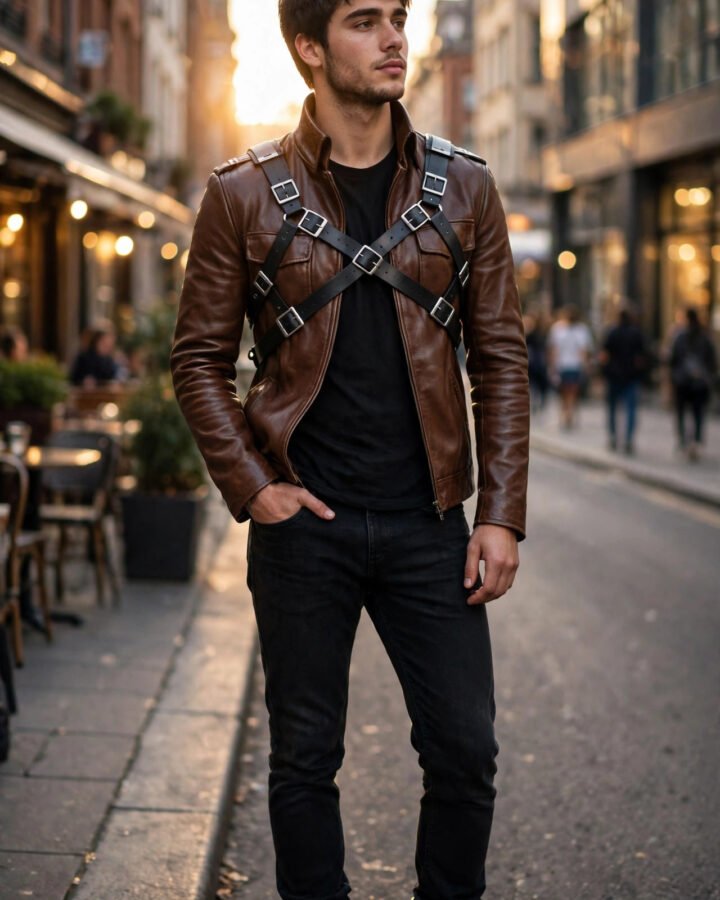
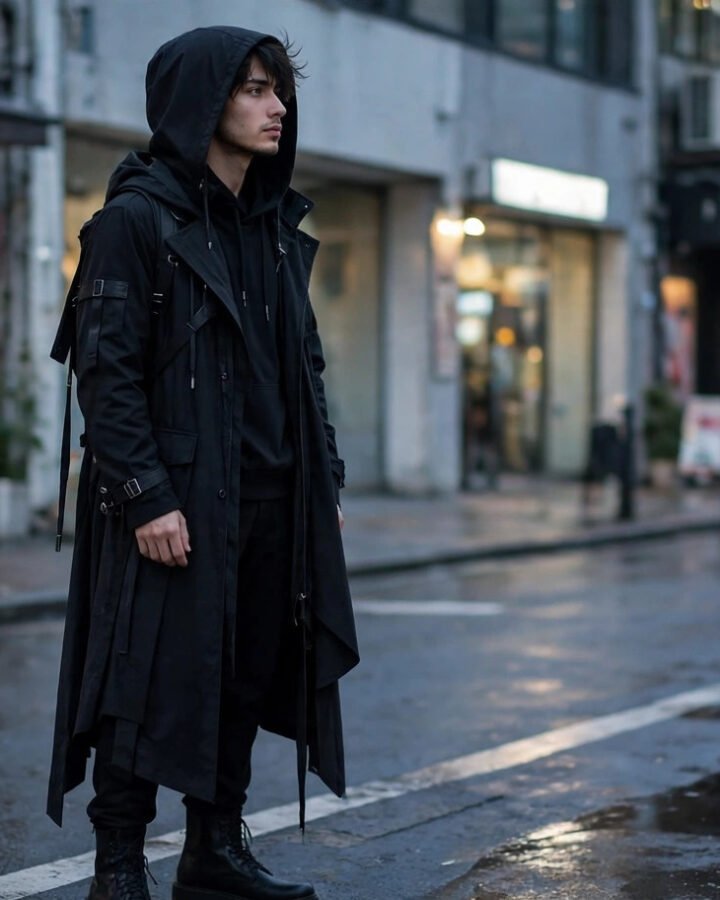
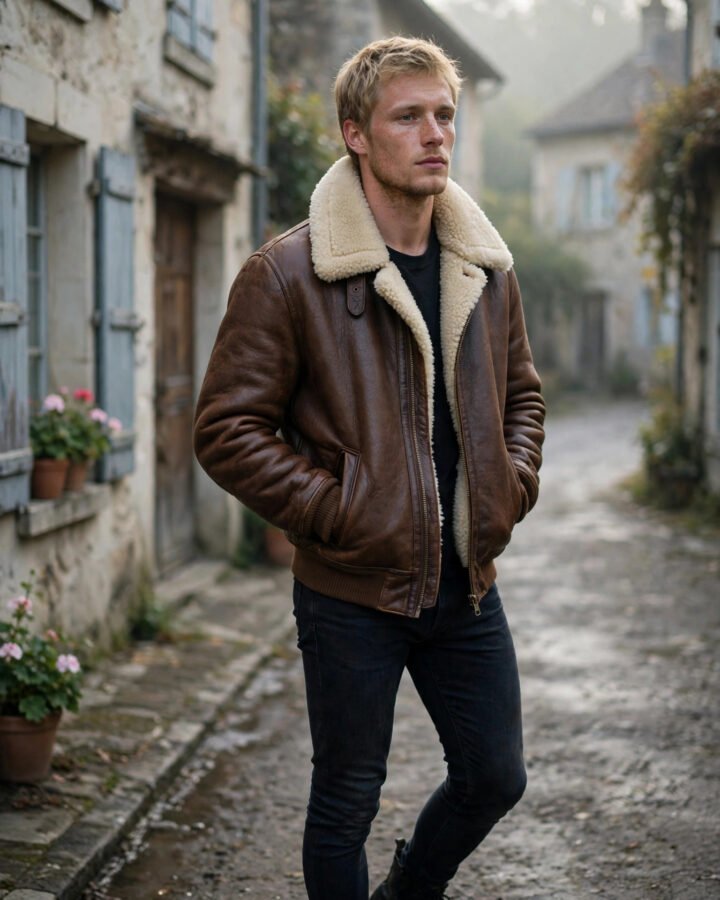
Do you own a black leather jacket? You are most of the way to a dozen characters already — from Sung Jinwoo’s black hooded coat look in our Solo Leveling guide to a dozen anime and game characters who wear black jackets. Do you own a brown leather jacket with a high collar? That is the heart of the Attack on Titan jacket and of Leon Kennedy’s brown bomber from Resident Evil 4. A white shirt, dark trousers and boots are the base of the Survey Corps uniform, and a plain red scarf turns the same outfit into Mikasa Ackerman.
Make a quick list before you choose anything: jackets and coats, shirts, trousers, boots, scarves, belts, bags, hats. Then match the list to characters, not the other way round. The character whose outfit is closest to what you already own is your first cosplay — and it will look better than a character you had to buy from scratch, because everything you are wearing actually fits you.
The 5 Pieces Every Beginner Cosplay Wardrobe Needs
You do not need a costume cupboard. You need five versatile pieces, and most of them are probably already in your closet.
A black leather jacket. The single most useful cosplay piece in any wardrobe. It anchors dark, dramatic characters, it works for men and women, and it is a real wardrobe piece you will wear long after the convention. A good one in real leather holds its shape and reads as quality on camera — which is where most cosplay photos are taken.
A plain white shirt. The base layer of half of all character outfits: the Survey Corps shirt, the school uniform shirt, the detective’s shirt, the shirt under a long coat. Buy it crisp, keep it plain, and button it to the top when the character does.
Dark slim trousers or jeans. Black or dark brown, slim, plain. They disappear under the character pieces and let the jacket and the accessory carry the look. Avoid logos, rips and bright washes — a cosplay outfit needs plain, dark bottoms.
Boots. Black ankle boots or knee-high boots, depending on the character. Boots do more work than any other single item: they change your silhouette, they ground the outfit, and they are the difference between a costume and an outfit that looks intentional.
One statement accessory. A scarf, a belt, a harness, a hat, a bag. This is the piece that says the character’s name. Mikasa’s red scarf is the textbook example — one plain red scarf over a brown jacket, and everyone knows who you are. Pick the accessory last, after the outfit is built, and spend your money here rather than on the basics.
If you are missing one of these, that is the piece to buy — and it is the only piece you need to buy for your first cosplay.
5 Easy Beginner Cosplay Outfits From Ordinary Clothes
Here are five first cosplays that need nothing you cannot find in a normal wardrobe, plus one bought piece at most.
The Scout (Attack on Titan). Brown or black leather jacket, white shirt, dark trousers, black boots, and a red scarf for Mikasa — or no scarf for a generic Scout. Our Attack on Titan jacket guide breaks down the full look, including the harness straps, but the beginner version needs none of that: jacket, shirt, boots and attitude are enough.
The Hunter (Solo Leveling). Black leather jacket or long black coat, black shirt, black trousers, black boots. Sung Jinwoo’s look is almost entirely black, which makes it one of the easiest beginner cosplays in existence — and the most forgiving, because black hides every mismatch. Our Solo Leveling outfit guide covers the full version with the hooded coat.
The Agent (Resident Evil). Brown leather bomber jacket, white or dark shirt, dark trousers, boots. Leon Kennedy’s Resident Evil 4 look is a real outfit before it is a cosplay: the shearling-collared brown bomber does all the work. Our Leon Kennedy guide has the details, including what to look for when you buy the jacket.
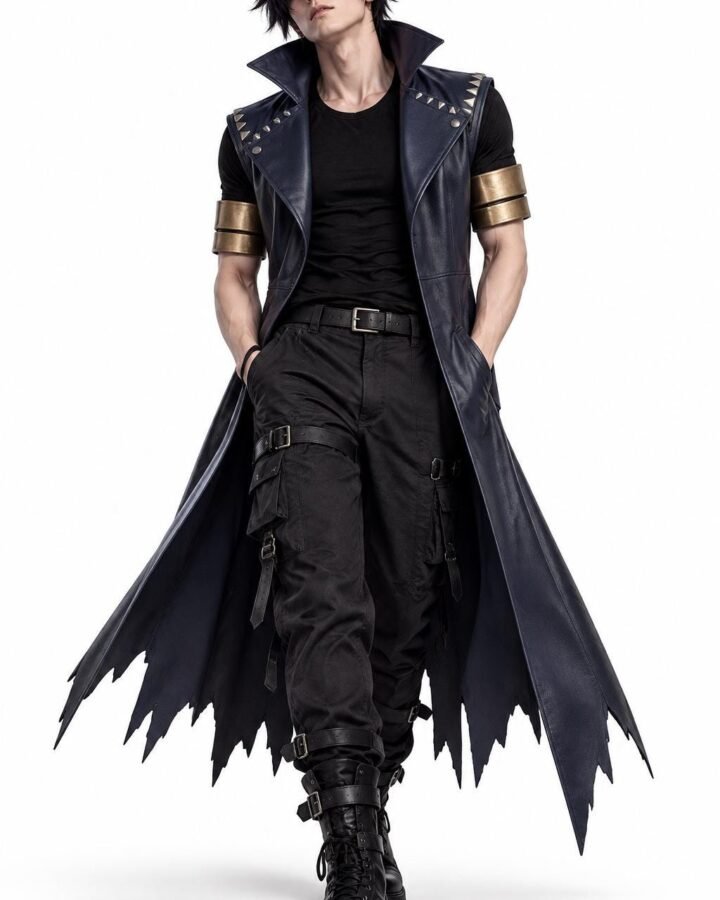
The Villain (My Hero Academia). Dark navy or black long coat, dark shirt, dark trousers, boots. Dabi’s look is built on the coat — one long dark coat over plain dark clothes, with the hair doing the rest. Our Dabi coat guide explains why the coat matters more than anything else in this outfit.
The Detective or Student. Black blazer or leather jacket, white shirt, dark trousers, boots, and a bag or a book as a prop. Half of all anime and game characters are students or investigators in ordinary clothes. This is the easiest first cosplay of all, and it is the one to choose if your wardrobe has no leather jacket yet — a blazer does the same job.
How to Pick Your First Character
Three rules, and they will save you from the most common beginner mistake — choosing a character your wardrobe cannot play.
First, pick a character whose outfit is mostly ordinary clothes. If the character wears armour, a ballgown, a spacesuit or a full-body suit, that is a second or third cosplay, not a first. If they wear a jacket, a shirt and trousers, that is a first cosplay.
Second, pick a character with one recognisable detail. A red scarf. A particular jacket. A colour combination. A hairstyle you can do with your own hair or a cheap wig. The detail is what makes people recognise the character; without it, you are just a person in a jacket.
Third, pick a character you actually like. You will be wearing this outfit for a whole day at a convention, posing for photos, and answering the same question about who you are fifty times. Liking the character is what makes that fun instead of tiring.
And one more: pick a character whose outfit suits your body and your climate. A long black coat is a great cosplay in November and a miserable one in July. A short jacket and a shirt work in almost any season. Our guide to the best leather jackets for men rounds up the cuts that work hardest across seasons, and the same logic applies to cosplay.
Styling Tricks That Make Wardrobe Cosplay Look Real
The difference between “person in a jacket” and “cosplay” is usually five small things.
Fit first. A jacket that fits — shoulders on your shoulders, sleeves ending at your wrist, the body sitting close without pulling — reads as a character’s outfit. A jacket two sizes too big reads as a costume you borrowed. Measure yourself before you buy anything, and use our clothing size converter to turn your measurements into US, UK and EU sizes.
Colour discipline second. Pick the character’s two or three colours and stick to them. Black, white and red. Brown, white and black. Navy, black and grey. Every extra colour dilutes the character. The photo above shows the discipline in action: black jacket, white shirt, red scarf, dark jeans, black boots — five pieces, three colours, one character.
The accessory third. One statement piece, worn properly. A scarf draped, not stuffed. A belt buckled, not hanging. A harness snug, not flapping. The accessory is the signature, so wear it like you mean it.
Hair and grooming fourth. You do not need a wig for most beginner cosplays — your own hair, styled toward the character, is usually better. Tie it back if the character does, part it the way they do, keep it neat. Grooming is the cheapest cosplay upgrade there is, and it is free.
Posture fifth. Characters have a way of standing. A scout stands straight. A hunter stands still. An agent stands ready. It sounds silly until you see the photos: the same outfit looks like a different character when the person wearing it stands like them. Spend five minutes in front of a mirror before you leave the house.
Makeup, Wigs and Props: What Beginners Actually Need
Almost nothing, for your first cosplay. Here is the honest list.
Makeup: only if the character has a specific mark — a scar, a tattoo, a coloured streak. Ordinary makeup for photos is optional, and for a first cosplay you can skip it entirely. If the character has a scar or a mark, a single eyeliner pencil will do it.
Wigs: only if your hair cannot do the character’s colour or length. A cheap wig that looks like a wig is worse than your own hair styled well. If you do buy one, spend a little more on a heat-resistant fibre wig in the right colour, and style it the night before — never for the first time on the morning of the convention.
Props: skip them for your first cosplay. Swords, guns, staffs and oversized weapons are expensive, hard to carry, often banned at conventions, and they are the fastest way to turn an outfit into a costume. The characters in this guide need no props at all. Your first prop, when you are ready for one, should be small, light and obviously part of the outfit — a bag, a book, a scarf.
What you do need: comfortable shoes, water, and a bag for your phone and wallet. Cosplay is a long day on your feet. The boots in the photo are real boots, not costume boots, and that is the point — you can walk in them all day.
Beginner Cosplay on a Budget
A first cosplay should cost as close to nothing as possible. The whole point of starting from your wardrobe is that the clothes are already paid for. Here is how to keep it that way.
Use what you own first. Before you buy anything, lay out the outfit from your wardrobe — the flat lay in the photo above is the method: everything on the bed, all at once, so you can see what is missing. Most of the time, one piece is missing, not five.
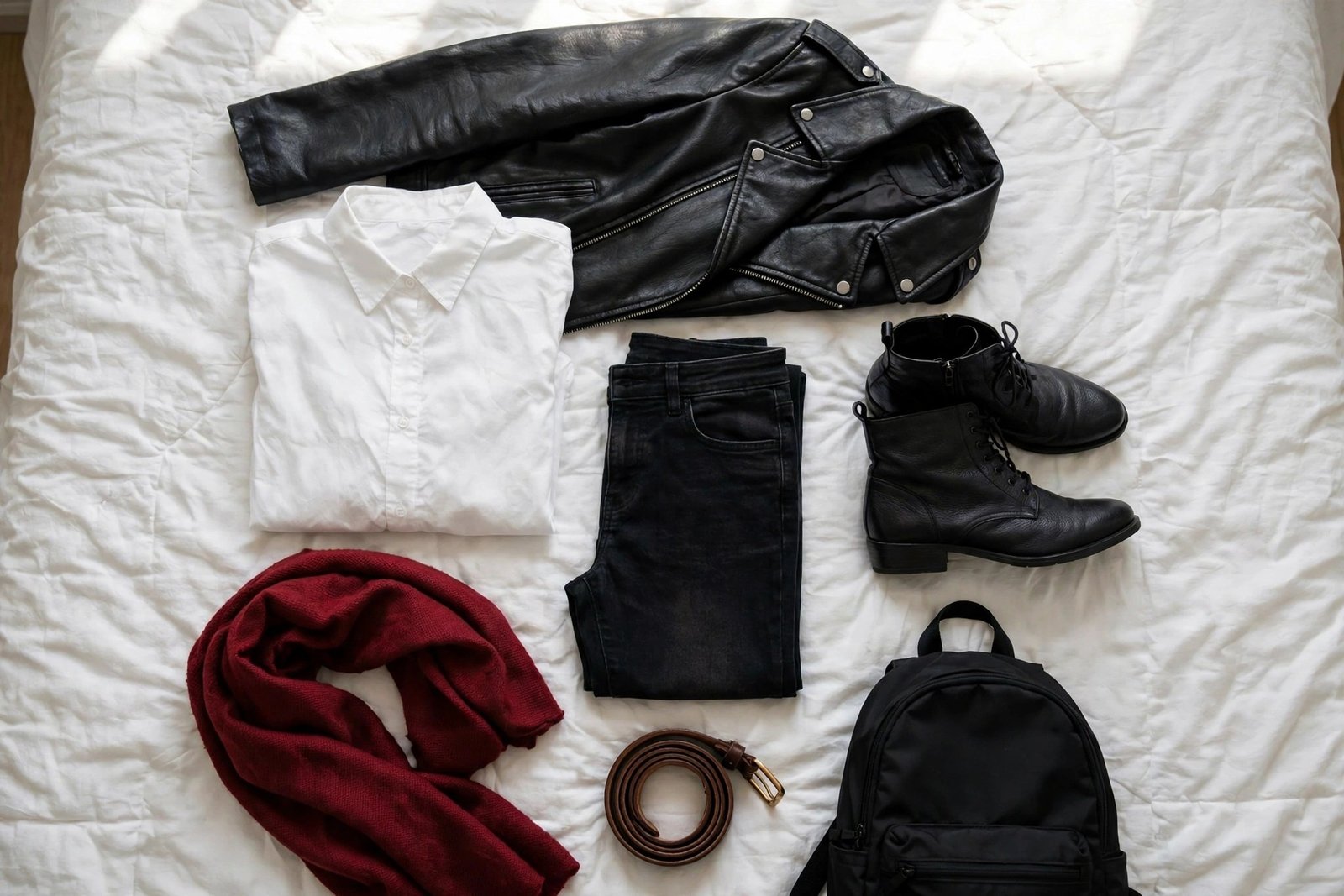
Thrift the missing piece. Charity shops and thrift stores are the beginner cosplayer’s best friend: leather jackets, white shirts, boots and scarves turn up constantly, and a thrifted leather jacket that fits is better than a new costume jacket that does not. Check the lining, the zips and the stitching before you buy.
Borrow before you buy. A friend’s brown jacket, a sibling’s boots, a parent’s scarf. Cosplay communities are generous with loans, and borrowing lets you test a character before you spend money on it.
Buy the key piece properly. If you do spend money, spend it on the one piece that defines the character — usually the jacket or the corset. A handmade black leather jacket or a black leather corset from a leather specialist is a real wardrobe piece: you will wear it after the convention, with or without the cosplay. Our own shops make exactly this kind of piece — handmade black leather jackets and black leather corsets from Abyzel Couture and Vintaaera, the same workshops behind the character jackets in our Solo Leveling, Dabi and Leon Kennedy guides. Before you order, take your measurements and check them against the seller’s size chart — a jacket that fits is the difference between a look and a costume, as we explain in our leather coat vs leather jacket guide — and our jacket fit finder walks through the same checks in two minutes.
And never buy a full cheap costume as your first cosplay. It will fit badly, feel worse, fall apart by midday, and you will never wear any of it again. One good piece beats five cheap ones, every time.
Cosplay for Men and Women: The Same Rules
Beginner cosplay works the same way for everyone, with one difference: the pieces change, the method does not.
For men, the wardrobe pieces are usually a leather jacket, a shirt, dark trousers and boots — the looks in this guide are built on exactly that. The character’s detail is often a jacket or a colour. Fit matters more than anything else: a fitted jacket on a man reads as the character; a loose one reads as a coat you borrowed.
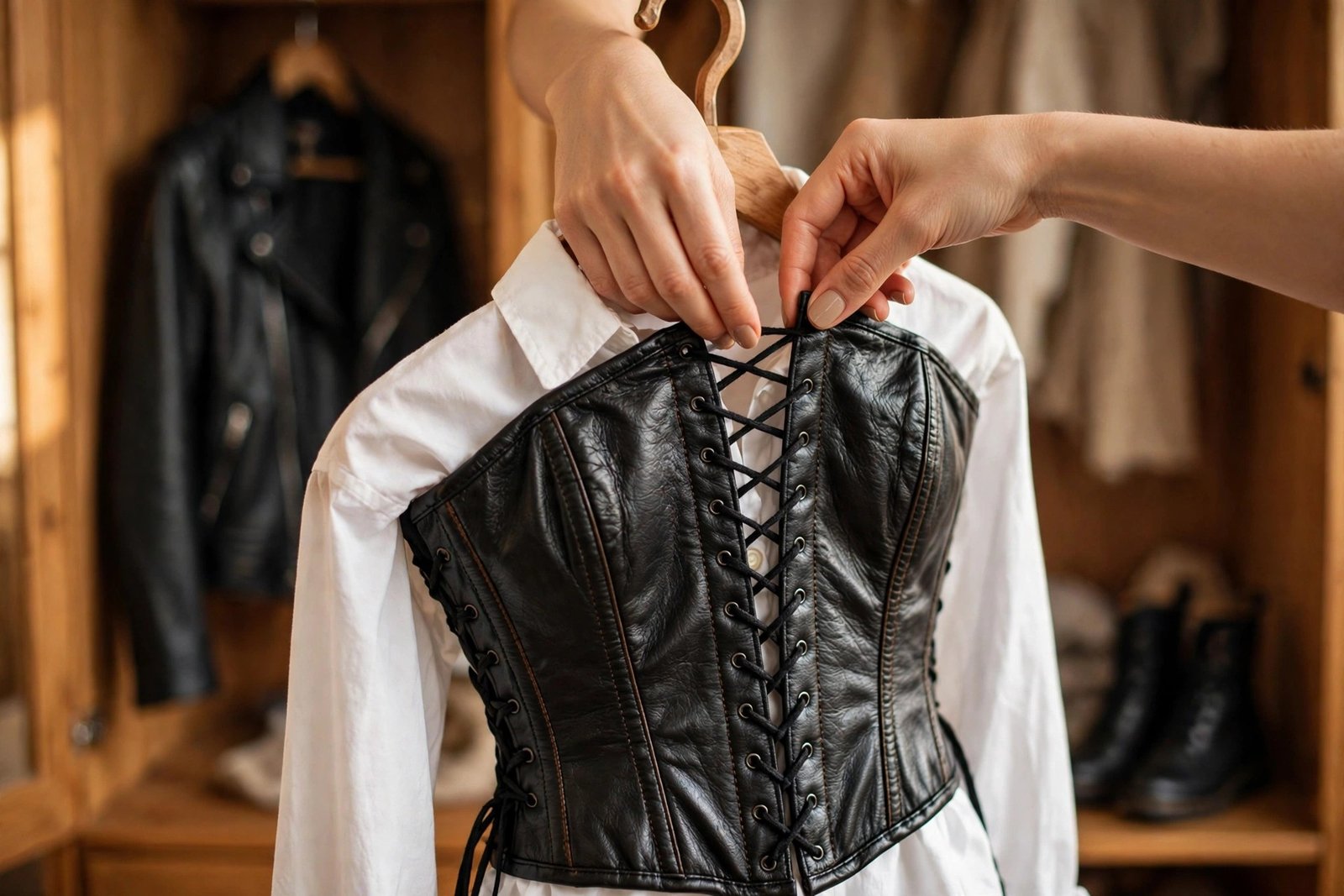
For women, the same pieces work, with one extra option: a black leather corset over a white shirt, as in the photo above, is a strong beginner cosplay piece in its own right. It gives structure to an outfit, it reads as a character detail rather than ordinary clothing, and it pairs with the same dark trousers and boots. A corset worn over a shirt is also one of the most forgiving cosplay pieces — it fits a wide range of bodies and it looks deliberate even when the rest of the outfit is simple. Keep the rest of the outfit plain when you wear one: the corset is the statement, and it does not need competition.
For both, the rule is the same: one statement piece, plain everything else, fit first.
Common Beginner Cosplay Mistakes
Every beginner makes one of these. Knowing them in advance is free.
Buying the costume first. The full cheap costume, bought online, that arrives two sizes wrong and looks nothing like the photo. Start from your wardrobe instead.
Too many details. Five accessories, three colours, a wig, a prop and a printed emblem. One statement, plain everything else — the rule from our Attack on Titan guide applies to every beginner cosplay.
Ignoring the shoes. Trainers with a leather jacket. It breaks the outfit instantly. Boots, always boots — or at least plain dark shoes that match the character’s era.
The wrong size. Cosplay jackets and corsets run small, and a tight one is uncomfortable all day. Measure, check the chart, size up if you are between sizes. Our guide on how to measure yourself for a perfect fit takes five minutes.
Forgetting comfort. A full day at a convention is eight hours on your feet. If you cannot walk, sit and eat in the outfit, it is the wrong outfit. Test it at home for an hour before the day.
And the biggest one: waiting until you can afford the perfect costume. The perfect costume never comes, and the people having the most fun at the convention are the ones who built their outfit from their wardrobe and just went.
Where to Buy the Key Pieces
Most of your first cosplay is already in your wardrobe. For the pieces that are not, buy them as wardrobe pieces, not as costumes.
A black leather jacket is the best first purchase: it is the key piece for the Hunter, the Agent and half the characters in our anime jackets roundup, and it is a jacket you will wear for years. A black leather corset is the best second purchase for women: it turns a plain shirt and trousers into a character look, and it works across cosplay and ordinary fashion.
Both are available handmade from our own shops — Abyzel Couture and Vintaaera — the same workshops behind the character jackets in our earlier guides. Buy real leather, check the construction, and measure before you order. A good jacket or corset is an investment in every cosplay you will ever do, not just the first one.
Frequently Asked Questions
What is beginner cosplay? Beginner cosplay is building a character outfit from ordinary clothes you already own — called closet cosplay — instead of buying or sewing a full costume. You pick a character whose look is made of normal wardrobe pieces, assemble it from your closet, and add one recognisable detail like a scarf or a jacket.
Can you cosplay with clothes from your own wardrobe? Yes. Most characters wear ordinary clothes — jackets, shirts, trousers, boots — and a wardrobe outfit that fits well looks better than a cheap bought costume that does not. The key is picking a character whose outfit is close to what you already own, then adding one signature detail.
What do I need for my first cosplay? Five things: a jacket or coat, a plain shirt, dark trousers, boots, and one statement accessory such as a scarf. Most people already own four of the five. You do not need a wig, makeup or props for your first cosplay.
How much does beginner cosplay cost? It can cost nothing — that is the point of starting from your wardrobe. If you need to buy one piece, spend on the key item (usually the jacket or corset) and buy it as a real wardrobe piece in leather, not as a cheap costume. Thrift stores and borrowing keep the rest free.
What is the easiest character to cosplay for beginners? Characters who wear ordinary clothes with one recognisable detail: a scout with a red scarf, a hunter in all black, an agent in a brown bomber jacket, a student in a blazer. Avoid characters who need armour, ballgowns or full-body suits for your first cosplay.
Do I need a wig for cosplay? No. For most beginner cosplays your own hair, styled toward the character, looks better than a cheap wig. Only buy a wig if the character’s hair colour or length is essential and your own hair cannot do it — and style it the night before, never on the morning of the convention.
Can men and women do closet cosplay? Yes. The method is the same for everyone: one statement piece, plain everything else, fit first. Women have the extra option of a leather corset over a white shirt, which works as a strong character detail with the same dark trousers and boots.
Final Word
Beginner cosplay is not a compromise. It is the smartest way to start: your wardrobe already holds most of a character, the pieces you buy are pieces you will actually wear, and the outfit that fits you well will always beat the costume that does not. Pick a character your wardrobe can play, add one detail that says their name, and go. The convention floor is full of people who started exactly this way — with a black jacket, a white shirt, and a red scarf.