How to Match Leather Shoes with Your Outfit (2026 Style Guide)
How to Match Leather Shoes with Your Outfit
Choosing the right shoes can make or break your entire look. Even the most expensive outfit can feel incomplete if your shoes don’t match properly. That’s why understanding how to match leather shoes with your outfit is essential for building a stylish and confident wardrobe.
In this complete guide, you’ll learn how to pair leather shoes with different outfits, colors, and occasions — so you always look sharp in 2026.
Why Matching Shoes Matters
Your shoes are one of the first things people notice. Matching them correctly can:
- Enhance your overall appearance
- Create a balanced outfit
- Show attention to detail
- Boost confidence
A well-matched pair of leather shoes can instantly upgrade your style.
Basic Rules for Matching Leather Shoes
1. Match Shoe Color with Belt
This is the most important rule.
- Black shoes → Black belt
- Brown shoes → Brown belt
This creates a clean and coordinated look.
2. Keep It Simple
If you’re unsure, go for:
- Black shoes for formal wear
- Brown shoes for casual or semi-formal outfits
3. Match Shoes with Occasion
Different occasions require different shoe styles.
Matching Leather Shoes by Color
Black Leather Shoes
Best With:
- Black suits
- Grey suits
- Formal outfits
Avoid:
- Light casual outfits
Black shoes are the most formal and versatile option.
Brown Leather Shoes
Best With:
- Blue suits
- Beige outfits
- Casual wear
Brown shoes are more relaxed and stylish.
Tan Leather Shoes
Best With:
- Light-colored outfits
- Summer outfits
They add a modern and fresh look.
Burgundy Leather Shoes
Best With:
- Navy suits
- Grey outfits
Perfect for a unique and stylish appearance.
Matching Shoes with Different Outfits
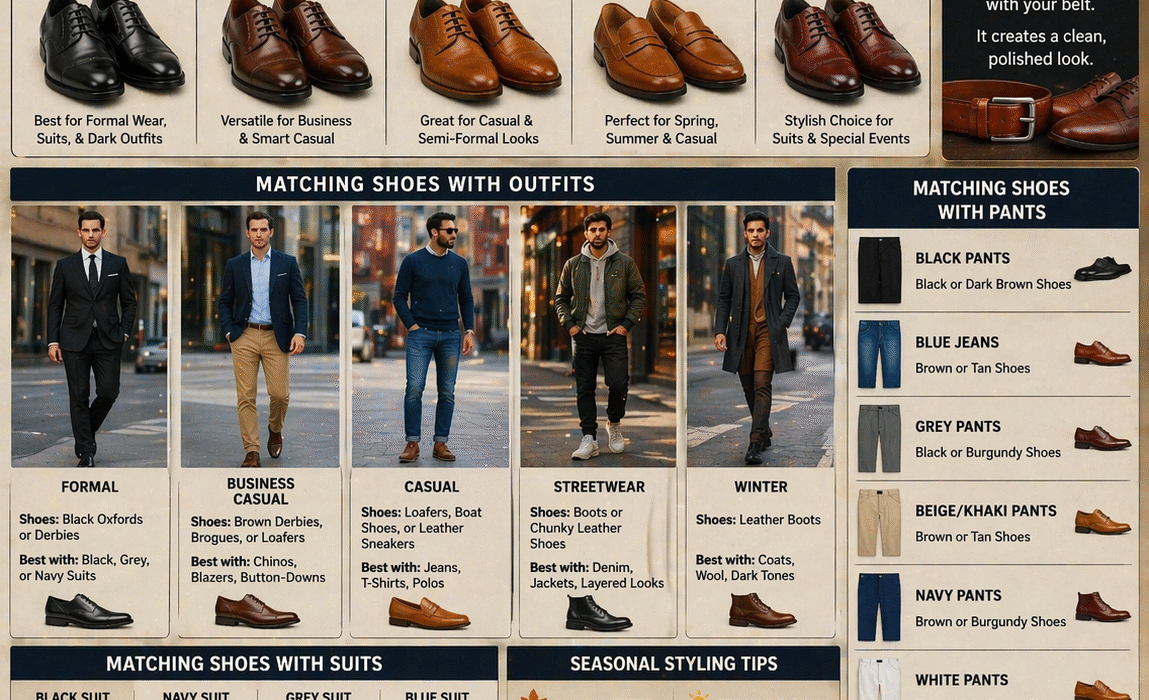
Formal Outfit
What to Wear:
- Black Oxford shoes
- Dark brown Derby shoes
Tip:
Keep the look clean and minimal.
Business Casual
What to Wear:
- Brown brogues
- Loafers
Tip:
Balance professionalism with comfort.
Casual Outfit
What to Wear:
- Loafers
- Casual leather sneakers
Tip:
Go for lighter colors like tan or brown.
Streetwear Style
What to Wear:
- Chunky leather shoes
- Boots
Tip:
Experiment with bold styles.
Winter Outfit
What to Wear:
- Leather boots
- Dark-colored shoes
Tip:
Focus on durability and warmth.
Matching Leather Shoes with Pants
Black Pants
- Black shoes (best option)
- Dark brown (acceptable)
Blue Jeans
- Brown shoes
- Tan shoes
Grey Pants
- Black shoes
- Burgundy shoes
Beige / Khaki Pants
- Brown shoes
- Tan shoes
Matching Leather Shoes with Suits
Black Suit
- Black shoes only
Navy Suit
- Brown or burgundy shoes
Grey Suit
- Black or brown shoes
Blue Suit
- Brown or tan shoes
Common Matching Mistakes to Avoid
1. Mixing Too Many Colors
Keep your outfit simple and coordinated.
2. Wearing Wrong Shoes for Occasion
Avoid casual shoes with formal outfits.
3. Ignoring Fit and Style
Even good shoes look bad if they don’t fit well.
4. Mismatched Accessories
Always match belt, watch strap, and shoes.
Seasonal Styling Tips (USA 2026)
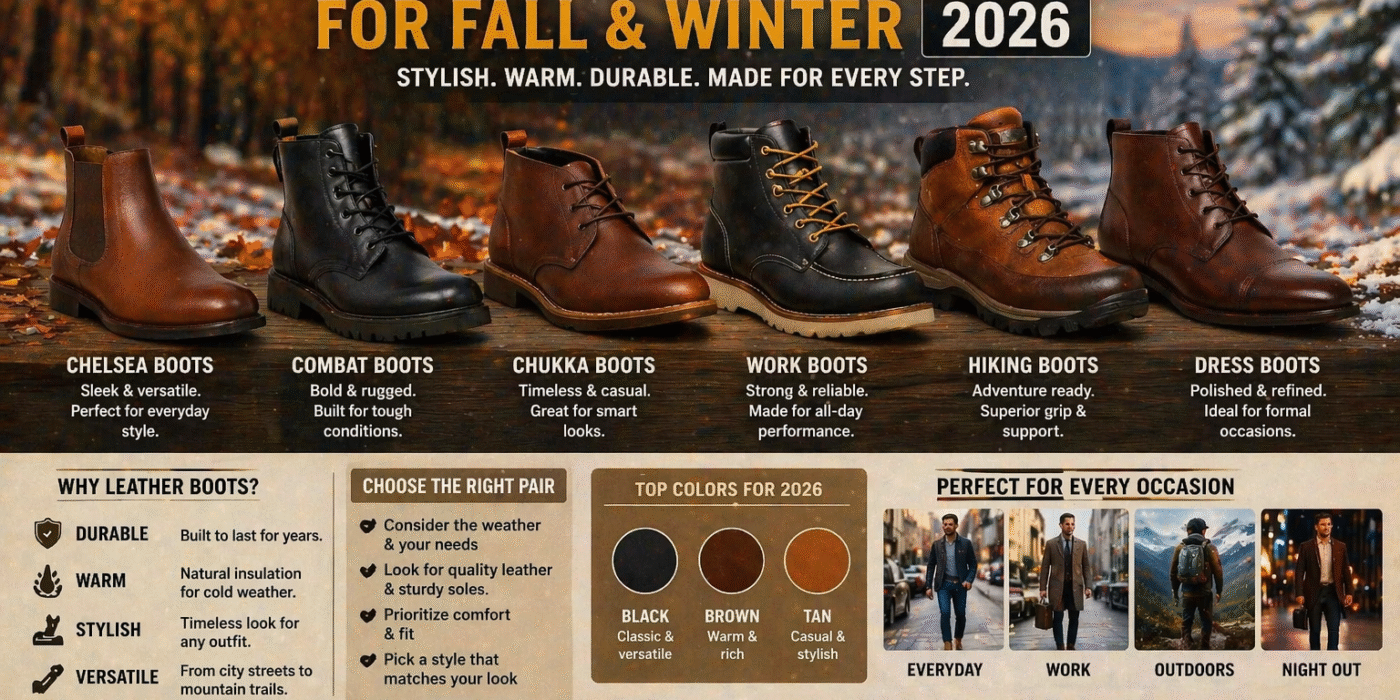
Fall & Winter
- Dark colors
- Leather boots
- Layered outfits
Spring & Summer
- Light colors
- Loafers
- Breathable styles
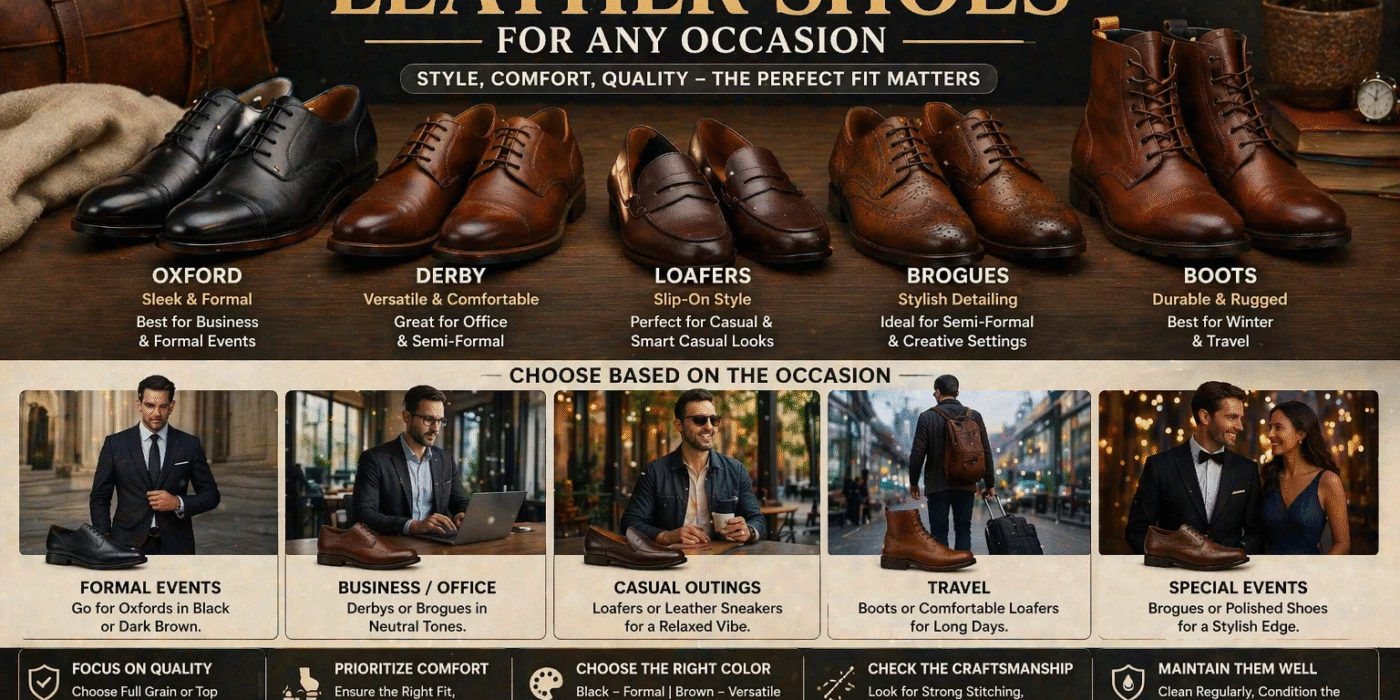
Leather Shoe Styles and Their Best Matches
Oxford Shoes
- Best for formal wear
Derby Shoes
- Great for office wear
Loafers
- Perfect for casual outfits
Boots
- Ideal for winter
Quick Matching Cheat Sheet
| Outfit Type | Best Shoe Choice |
|---|---|
| Formal | Black Oxford |
| Business Casual | Brown Derby |
| Casual | Loafers |
| Winter | Boots |
| Summer | Tan Loafers |
Pro Styling Tips
1. Invest in Neutral Colors
They match most outfits.
2. Focus on Quality
Good leather shoes elevate your look.
3. Keep Shoes Clean
Dirty shoes ruin your outfit.
4. Rotate Your Shoes
Increases lifespan.
Why Leather Shoes Are the Best Choice
Leather shoes offer:
- Durability
- Premium appearance
- Comfort
- Long-term value
They are a must-have for any wardrobe.
Final Thoughts
Learning how to match leather shoes with your outfit is one of the most important style skills you can develop.
From formal suits to casual outfits, the right pair of leather shoes can elevate your entire look. By following simple rules like color matching, choosing the right style, and considering the occasion, you can always look polished and confident.
In 2026, fashion is all about smart styling and timeless pieces — and leather shoes are at the center of it.